FAQs
-
List of private carriers coming soon.
New this year, we will be utilizing private animal transport services for shipping. You will need to contact one of these services to arrange transport. Contact them to find one that services your area & the birds need to ship within 2 weeks of your selected hatch date. The transporter determines their routes. If your very rural, you may need to meet them at the closest interstate. You’ll need to work out payment thru them. If you can not arrange shipping, you will need to pick your birds up at the farm in GA.
As a very last resort, priority express USPS may be used, but there will be no arrive alive guarantee. There will be no refunds or replacements for birds thru USPS. If you order hundreds of dollars of birds & they all arrive deceased, you will be out hundreds plus shipping cost.
I am speaking with different carriers to determine how this will work & details. You can always still pick up at the farm.
-
Turkey poults need a minimum of 28% protein starter non-medicated feed till 12 weeks of age. If you are raising birds for your own harvest then feed them a 20 to 22% feed, grower & finisher after 12 weeks. They can be fed chicken feed but turks definitely do better with a higher protein feed. They are also excellent buggers & the more you can safely free range the less food you will need to buy. You may also need to add grit if not available free ranging. I do a 50\50 mix with a quality scratch grain & 22% gamebird pellets. Find what works for you & your flock. In a pinch, cat food is high in protein.
Also they love snacks! Celery leaves, lettuce, grapes, even left over fishing crickets. I have a video of our house bird sharing a banana with me!
We did try our hand this summer at raising black soldier fly larve & found it fairly easy so will increase our efforts this spring. Don't think we can grow enough to feed 800 lbs of birds haha, but any little ones will love the high protein. Will let ya know how it goes.
-
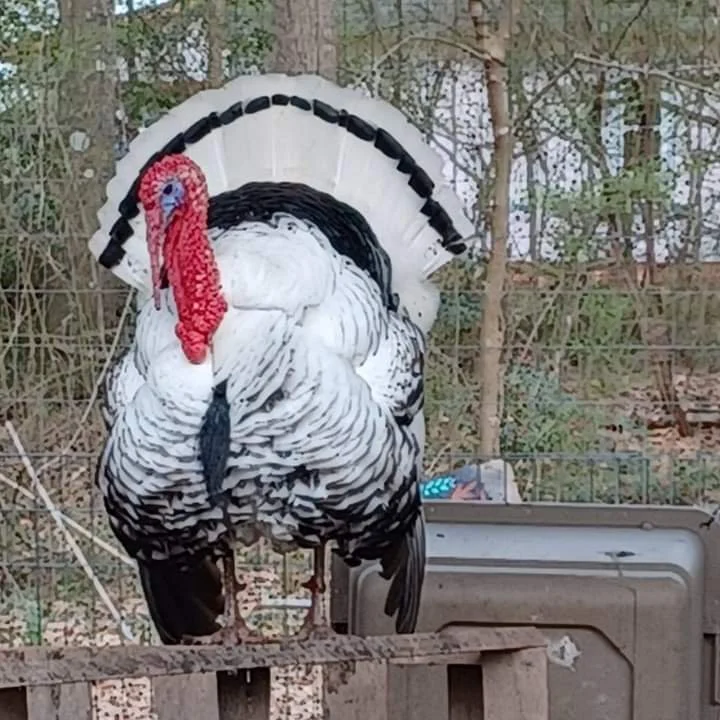
Turkey poults can not be sexed like a chicken can. You may read about vent sexing, but if it was safe for the birds, all the commercial hatcheries would do it. Turks need to be about 4 months old to start noticing a difference between them. Both toms & hens can strut at an early age as a show of dominance. Hens may try to gobble & tho uncommon, grow a beard. The first thing I’ve noticed is the snood. That finger of skin on top of their beak. A toms may drop over & hang lower than his beak depending on his mood. A hens will stay small. Hens will also have a little mohawk of hair\feather growing up the back of the neck. Some toms are slow to lose this & will fool ya. Another is, once feathered out, toms will have black edging on breast feathers where as hens will be much lighter, buff or white. A tom will also start to outgrow his sibling hens fairly early.
The ability to tell them apart comes with experience & I have been fooled more than a couple times. Some people have even found out when their tom laid an egg! HAHA Patience is key!
May have big annoucement coming regarding this!! STAY TUNED!
-
At hatching, poults need 95°f for the first week. This temp can be reduced 5°f each week for 6 weeks or till night time temps reach the same. So you will need a heat source such as a red heat lamp or a plate. Please use common sense as a heat lamp can produce high temps. Your brood pen should be large enough that they can move away from the heat if too hot. If you see your babies huddled under the lamp, its too cold & if they huddle in a far corner away from the heat, its too hot. With a lamp you raise or lower the lamp to adjust the heat.
Grown birds can handle pretty much anything their wild bird cousins can. They do need fresh water year round, shade in the summer.
-
Well if you can sit on 15 eggs for 28 days straight without breaking them, of course you can!
But it is much easier if you get an incubator or even a broody mama hen to sit on them. Follow the instructions that come with your incubator for temp & humidity. I use the bluetooth thermometers to monitor my incubators. You’ll definitely want one with a turner & fan. Also make sure you have 1 that will handle turkey eggs, not quail trays. You can go simple with 10-12 egg capacity or go big with digital temp & humidity controls with 100 + egg capacity.
Turkeys hatch in 27-28 days. I never candle my eggs till day 14 & only discard if gin clear or see the dreaded blood ring! I thought some were no good once till I opened them up & had a turkey eye looking back at me. Lesson learned! I may or may not candle again on lock down at day 25. This is when you no longer need the turner. Or move into a separate hatcher. I have had the 1st pip on day 25 more than once. Hatchlings can live on their yolk sack for 72 hours so no need to open the incubator till all or most have hatched. This is when the “shrink-wrap “ happens. Due to sudden drop in humidity the membrane surrounding the bird in the egg dries out & preventing the bird from moving around the egg opening the shell.
If doing multiple hatches at once, you can get a separate incubator as a hatcher. Tip- watch the sale places like market place & Craigslist. You can save a ton of $$$ after spring hatching season.
Once they have all hatched you can move them to the brood pen. Dip their beaks in water then food. You can add a marble or something to get their interest up or place a baby chicken in there to teach them to eat. I've had great success with shredded clover leaves sprinkled in food & water, or a poult from previous hatch to teach them. The 1st 3 days are critical to becoming a turkey parent! But I have very rarely lost a bird past day 4!
Some hens make excellent mothers. Ya never know till you let her try. Mama Turkey sitting on her eggs will surprise you! They can hiss like a mad goose & strike like a king Cobra! I wear full welding gloves when I candle eggs under a hen.
-
A 10 X 10 dog kennel can hold 4 grown turkeys tho tight. They need cover for shade but sometimes seem to prefer standing in the rain. They may use an inside coop, but definitely prefer to roost off the ground. 4 foot is plenty but if you free range they will roost as high as possible, on the roof of your house mostly! HAHA! I repurposed greenhouse frames for my pens.
I use the large pet carriers as nesting boxes.
If you have a lot of predators you’ll need to close them up at night. Or get a LGD,livestock guardian dog. Racoons love eggs as do snakes.
If you do free range your birds in an area where wild turkey are, they may just decide to leave with them. My threatened to whip butt for invading their territory.
-
A good idea is to have a separate pen or cage to isolate any bird for observation that you may believe is sick or to quarantine a newbie for a while to evaluate before exposure to rest of the flock.
Droopy wings, do not confuse this with when they hold their wings out when it's hot out. But they may hold out their wings when running a fever also.
Not eating, this can be difficult to tell with large flocks when only 1 isn't eating. If 1 normally runs for snacks then doesn't, could be an indication.
Odd poop, off color, contains worms, constant diarrhea, bloody. Never thought you'd be a poop watcher, did ya?? Well it can be a good first indicator of problems. Quick reaction can be the difference between a loss & saving your birds. Some diseases can spread thru a whole flock fairly quickly.
Feather loss, outside of normal molting. Mites & lice may cause this. There are several types.
Scabby lesions,google fowl pox for pics. Once they've had it, they're immune.
-
just my list, ill explain each as i have time to edit. not all are required but good to have on hand
Note: I will not try to explain all diseases mentioned here, it would take a vet manual. Like Mercks. Do your own research, rely a lot more heavily on research papers from universities & vet manuals than what someone on FB said tho they can point you in the right direction to research further, sometimes.
Note 2. Ever notice the ads saying no antibiotics in our chickens ever? That's because it's against the law for anyone to use antibiotics in an animal bound for market. May be why it's now illegal to buy them for your own farm. Science claims that it can reduce effects of antibiotics on you if you ingest them when you don't need them.
The best thing for your birds is a clean environment. Scoop the poop on a regular basis, replace any bedding for nest etc. You can lime and add Diatomaceous earth [DE] as needed. Note: some swear by DE, others say it does nothing. I have yet to try the electorpsp(i think is the name). No recommendation on pen flooring. I did have a tree company dump a truck load of mulch, still undecided if going this route. Edit, recently found a bagger for my riding mower at an estate sale & the birds love picking thru it plus it absorbs good & compost easily with the poop when we scoop the pens.
Note: some meds(like antibiotics) require a prescription. You may or may not find a vet that will prescribe for a bird. A vet is not allowed to prescribe a med that isn't FDA approved for that particular animal, even if it works. But some will work with you.winkwink
apple cider vinegar-Add 1 tablespoon to 1 quart of fresh drinking water from day 1. Helps with pasty butt. Poop can dry, blocking vent preventing defecation which can kill a poult. If you see a poult not eating & drinking check vent first. If so wipe with warm damp cloth. Note: Some are dead set against ACV & will boot you for even mentioning it on their FB page. I still use it.
oregano & cayenne pepper- dewormer & preventive. I haven't used the oregano but have read that many use oregano oil in the water. I have become a firm believer in the cayenne pepper. I sprinkle liberally on food once a month, more if I see signs of a sick bird, droopy wings, diarrhea etc.
rooster booster- good source of vitamins
Nutridrench- for young birds I mix a dropper full per pint of water. A drop or two directly in the mouth of a poult 3-4 times a day will perk them up & can help a bird that is slow to eat & on the verge of passing.
vetrx- like vicks vapor rub but for critters, does help when having respiratory issues.
febendazole- a dewormer, in paste or liquid. For cattle & equine but works on birds. Panacur is another brand
metrodiazanole- fishzole&other names, a medication for fish, BUT the only thing that will save a turkey(or pheasant) from histomoniasis(blackhead disease)
la 50 or 200- an all around good respiratory antibiotic for critters in general
CORID- for the prevention and treatment of coccidia
Ivermectin - some use the pour on as a lice/mite prevention and cure tho I haven't needed it, yet.
-
I'm in GA so UGA vet school is an excellent resource. Just Google vet school to find the one nearest to you.
Mercks vet manual/turkey
American poultry association
ill be back as I learn more